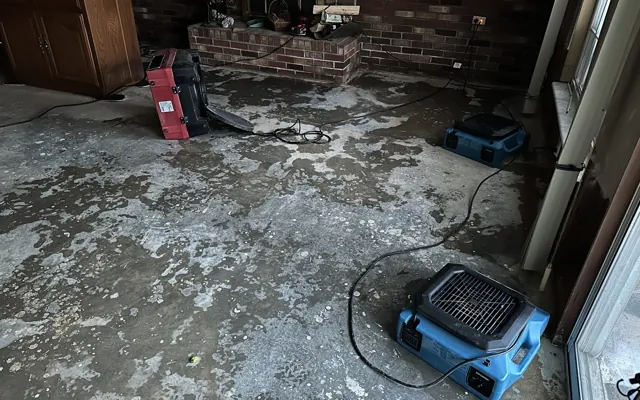
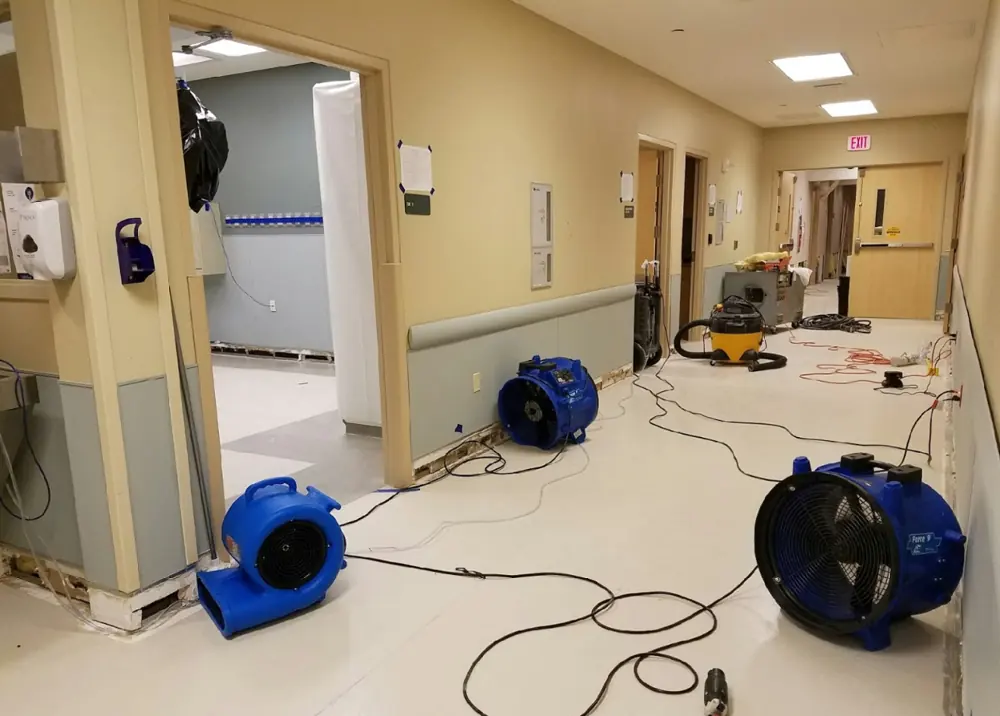
Nor'easters and coastal storms push rain, runoff, and Sound surge into Stamford homes. Crews extract the water, muck out what cannot be saved, and dry the structure before mold takes hold.

Crews assess the water source and category, then pump and extract standing water from floors and basements.
Silt, debris, and contaminated porous materials are removed so the structure can be cleaned and dried.
Hard surfaces are washed and treated with antimicrobial agents to address category 3 contamination.
Air movers and dehumidifiers dry the structure to a verified standard, confirmed with moisture readings.

While help is on the way, these first steps, done only where it is safe, limit the damage and protect the insurance claim.
Shut the supply off at the source, or close the home's main valve if the source is not obvious. Stopping the flow limits the damage more than anything else.
Switch off electricity to the affected area, but only if the breaker can be reached without standing in or touching the water.
Get a crew dispatched right away. The sooner extraction and drying begin, the more flooring, drywall, and belongings can be saved.
Take photos and a short video of the water and the affected rooms before anything is moved, so the insurance claim starts strong.
Storm and flood cleanup in Stamford typically runs $2,500 to $8,000 or more, depending on how much water and sediment entered, how much of the structure is finished, and how much material must be removed. A contained ground-floor flood dries out toward the lower end, while a deep surge or river flood with heavy muck-out runs higher. Outside flooding usually falls under a separate flood policy rather than a standard homeowner policy, so the cause and scope are documented carefully for the claim.
Crews reach Stamford and lower Fairfield County fast, from Shippan and Glenbrook to Darien, Greenwich, Norwalk, and New Canaan, plus the New York border towns of Port Chester and Rye. See the full list on the areas served across Stamford page.
See all areas servedEvery loss is photographed, measured, and logged from the first visit, so the paperwork holds up with your insurance carrier.
Technicians follow recognized IICRC drying standards and prove the work with daily moisture readings, not guesswork.
Emergency dispatch any hour of the day or night, with a real crew on the way, not a callback in the morning.
A real crew dispatched any hour, not a callback in the morning.
Trained technicians following recognized IICRC drying standards.
Truck-mounted, portable, and submersible for any size loss.
The loss is documented and billed to the carrier directly.
Direct hurricanes are rare here. The bigger and more frequent threats are nor'easters, strong coastal storms, and Long Island Sound surge at high tide, though remnants of a tropical system occasionally bring heavy rain and flooding.
No. Surge and river flooding carry contaminants and sediment, so it is handled as category 3: extracted and disposed of safely, with soaked porous materials removed rather than dried in place.
Right away. The contamination and the humid air after a storm let odor and microbial growth start within a day or two, so fast extraction and drying protect far more of the home.
Wind-driven rain through a damaged roof may fall under a homeowner policy, but rising surface water and surge usually require a separate flood policy. The cause is documented so the claim is directed correctly.
Sealed hard surfaces often clean up, but drywall, insulation, carpet, and pad that soaked category 3 water are removed for health reasons and replaced during the rebuild.
Stamford crews are on call 24 hours a day, local and fast, and can be on the way within the hour.
Call (475) 239-5010