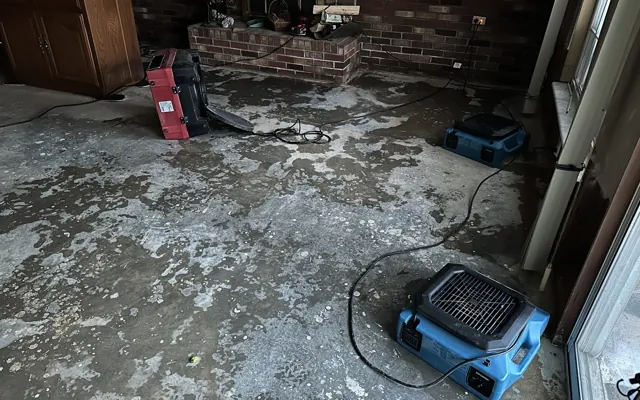
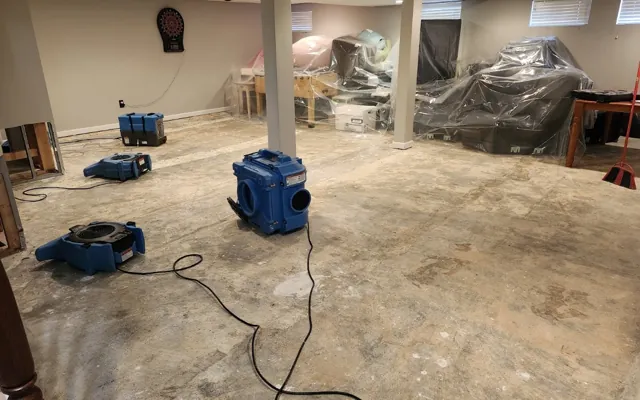
When a storm surge or downpour floods a low-elevation house in Waterside, CT, local restoration crews respond quickly. They follow IICRC-standard methods to remove water, sanitize, and get the structure dried and verified.

Technicians first identify the water category and source. They then use pumps and extractors to remove all standing water from the home's flooded areas, which is critical for Waterside's low-lying properties.
The crew clears out silt, debris, and ruined porous materials like drywall or insulation. This muck-out step is often necessary after floodwaters recede in this harbor-side neighborhood.
Hard surfaces are cleaned and treated with antimicrobial solutions. Air movers and dehumidifiers then run until moisture readings meet the dry standard, protecting the home's structure.

Storm and flood cleanup in Waterside typically runs $2,500 to $8,000 or more, depending on how much water and sediment entered, how much of the structure is finished, and how much material must be removed. A contained ground-floor flood dries out toward the lower end, while a deep surge or river flood with heavy muck-out runs higher. Outside flooding usually falls under a separate flood policy rather than a standard homeowner policy, so the cause and scope are documented carefully for the claim.
In the Waterside neighborhood, older frame homes sit on flat ground along the West Branch harbor. This geography makes them vulnerable when heavy rain or a nor'easter overwhelms the local drains, leading to tidal backup and street flooding that can quickly enter basements and ground floors. Waterside's low elevation and older drainage systems struggle during intense coastal storms. Nor'easters and sudden downpours can push tidal water back up through drains, while flat streets allow runoff to pool, leading to basement and first-floor flooding in many homes. From Waterside, crews also cover nearby South End, Cove, West Side, Glenbrook, Ridgeway, East Side. See every neighborhood and town on the full service area page.
See all areas servedEvery loss is photographed, measured, and logged from the first visit, so the paperwork holds up with your insurance carrier.
Technicians follow recognized IICRC drying standards and prove the work with daily moisture readings, not guesswork.
Emergency dispatch any hour of the day or night, with a real crew on the way, not a callback in the morning.
A real crew dispatched any hour, not a callback in the morning.
Trained technicians following recognized IICRC drying standards.
Truck-mounted, portable, and submersible for any size loss.
The loss is documented and billed to the carrier directly.
Costs depend on the water volume, sediment, and materials affected. A contained ground-floor flood may be toward the lower range, while a deep surge requiring extensive muck-out runs higher. Local crews document everything carefully for flood insurance, which often covers these events separately.
Technicians move salvageable items to a dry area or elevate them on blocks. Porous materials like upholstered furniture that contacted contaminated floodwater typically cannot be saved and are removed as part of the debris clearance process.
Crews are on call 24 hours a day and can be on the way to Waterside within the hour.
Call (475) 239-5010